Shoulder pain is one of the most common complaints among people living with Parkinson’s disease. While many assume it’s caused by a rotator cuff injury, the real sources of the pain are often the shoulder blade and the muscles that support it.
Parkinson’s can cause rigidity in the chest, neck, and upper back, along with reduced arm swing and a stooped posture. These changes affect how the shoulder blades move across the rib cage—a condition known as scapular dyskinesis. Instead of gliding smoothly, the shoulder blades become restricted, placing extra stress on the rotator cuff, upper trapezius, and muscles around the shoulder joint.
As posture becomes more rounded, the chest muscles tighten, while the upper back muscles weaken. This imbalance pulls the shoulders forward, limiting range of motion and increasing discomfort in the neck, shoulders, and upper back.
The good news is that improving shoulder blade mobility and strengthening the muscles of the upper back can make a significant difference. Restoring normal movement of the shoulder blades often helps reduce pain, improve posture, and make everyday activities easier.
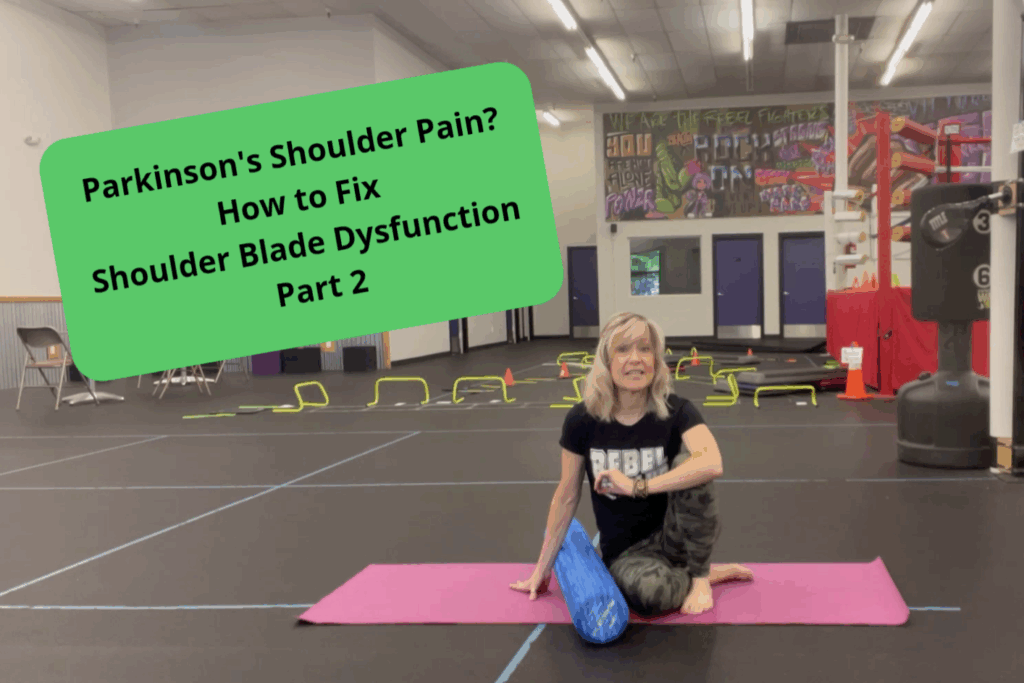
Click below to watch Part 2 of Parkinson’s Shoulder Pain? How to Fix Shoulder Blade Dysfunction:
You can check out Part 1 here: Parkinson’s Shoulder Pain: How Shoulder Blade Dysfunction Causes Pain.
Did you know that we offer a variety of specialty online courses to address your Parkinson’s symptoms, including stooped posture?
- Rebel Fit Club Posture School
- “From Cramping Feet to Happy Feet!” Course
- PD Exercises to Improve Hand Dexterity & Mobility
And if you would like to improve your balance, you can join our Balance Builders Course! It’s a five-week course that you can do in person or virtually. Classes are held once a week, and you’ll also get recorded videos that you can do at home. For more information, email Kimberly.
💜 Coach Kimberly
Ready to take back your fight?
Contact me to get started in Kimberly Berg’s Rebel Fit Club Parkinson’s Boxing classes today. We have online workouts, too!
Subscribe now to get more tips and exercises for Parkinson’s delivered right to your inbox!