SEARCH OUR AMAZING LIBRARY
OF VIDEOS AND ARTICLES TO
HELP YOU MANAGE YOUR PARKINSON’S
Blog
Parkinson’s Stooped Posture Causing You Pain? Get your Shoulder Blades Gliding!
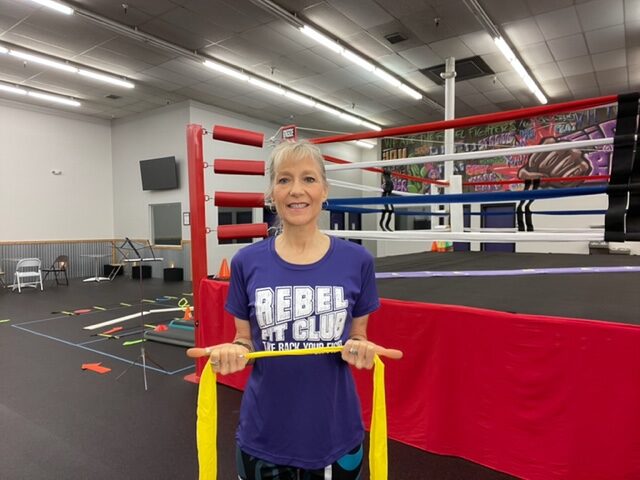
Many people with Parkinson’s complain of shoulder pain in addition to their stooped posture. It may seem like these are two different problems, but your shoulder pain may be just a symptom of dysfunction of the upper back and shoulder blade relationship. If this dysfunction is ignored for too long, it can result in a rotator cuff tear.
Your shoulder blades should “glide and float” on your rib cage. If you have a stooped posture, your shoulder blades can’t sit or glide normally on the ribs. Your chest muscles become tight and pull the shoulders and arm forward, creating shoulder pain and complications with the rotator cuff muscles.
Continue reading “Parkinson’s Stooped Posture Causing You Pain? Get your Shoulder Blades Gliding!”Why the Wide-knee Child’s Pose Helps Parkinson’s Tight Hips
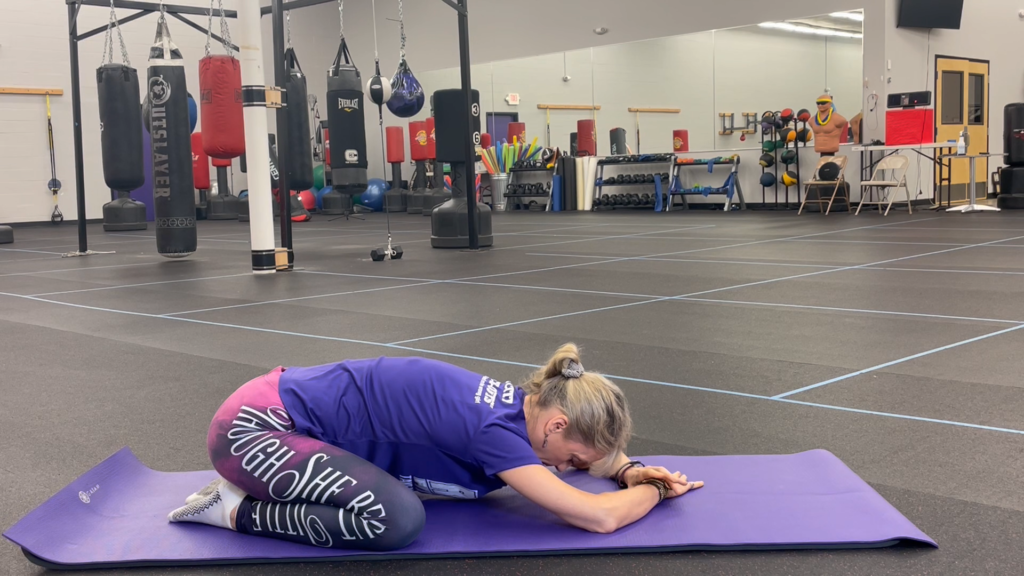
Most people, with or without Parkinson’s, have really tight and maybe even painful hips and lower backs.
Muscles and soft tissue can become “boggy” around these joints and the surrounding areas, making our lower backs and hips painful when we’re trying to sit or walk. I will show you how to do a simple Child’s Pose going into a Modified Frog Pose to help loosen up your hip joints and release your tight muscles.
Continue reading “Why the Wide-knee Child’s Pose Helps Parkinson’s Tight Hips”How To Get the Best Results To Slow Down Your Parkinson’s: Show Up!
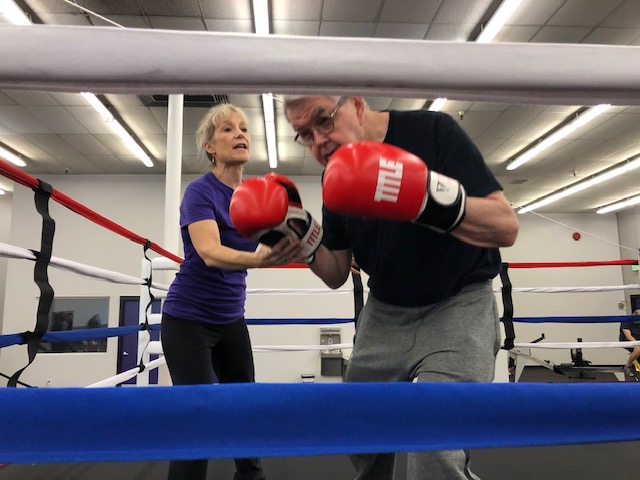
“How do I slow down my PD progression?” I get asked this question a lot, and I answer it with another question: “Are you doing what you need to slow down the progression?” In other words, are you showing up?
“Showing up” means optimizing the resources available to you. The teachers are all around you. Do you seek them out, and if so, do you practice and do your “homework” to get the most out of your sessions?
Continue reading “How To Get the Best Results To Slow Down Your Parkinson’s: Show Up!”How To Manage Raynaud’s Syndrome When You Have Parkinson’s
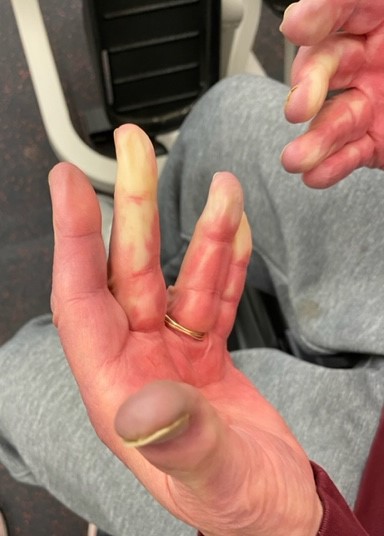
The picture above is of my client who has Parkinson’s. He kept coming into the gym wondering why his hands were purple. This is what Raynaud’s Syndrome/Phenomenon can look like.
Raynaud’s is a decrease in blood flow mainly in the fingers, but it can also affect the nose, ears, or toes. Raynaud’s affects three to five percent of people in the United States. Women are more likely to have Raynaud’s. I have Raynaud’s myself, so I know how painful it can be when you aren’t moving your hands a lot!
Continue reading “How To Manage Raynaud’s Syndrome When You Have Parkinson’s”Parkinson’s Stiff Hands? Do the Painting Technique!

Hand and finger stiffness is a huge problem for people with Parkinson’s. I bet at one time or another every one of my fighters and dancers has come to me asking for hand exercises.
I was working with one of my private clients and I asked her to do the thumb painting exercise. When she said, “Wow! That is really hard!” I realized we take the ability to use our thumbs for granted when we don’t have PD.
Today’s quick hit is going to be painting your fingers with your thumb. I started doing this as my own hand therapy after I broke my thumb while hiking years ago. I still do it to warm up my thumbs.
Continue reading “Parkinson’s Stiff Hands? Do the Painting Technique!”