SEARCH OUR AMAZING LIBRARY
OF VIDEOS AND ARTICLES TO
HELP YOU MANAGE YOUR PARKINSON’S
Blog
These 10 Exercise Components Are Needed To Slow Down Parkinson’s
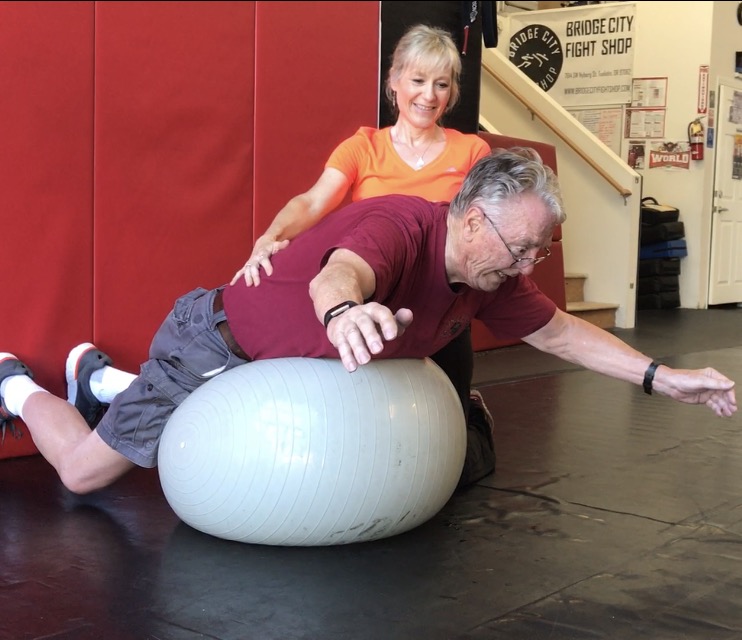
You might be thinking, “I don’t have time for exercise,” or “I’m too tired to do this every day.” Maybe you’re wondering, “What’s the bare-bones minimum amount of exercise I need to do?” Unfortunately, this approach will NOT get you the results you need or want.
A better response is: “Put me in, Coach!!!” How much, what kind, how long, and how often? Answering these questions will help you slow down this disease so that you can get your life back.
Check your current exercise routine. Be honest: are you doing all of the things you need to create brain change and slow down Parkinson’s?
Continue reading “These 10 Exercise Components Are Needed To Slow Down Parkinson’s”Use a Resistance Band to Correct Parkinson’s Stooped Posture
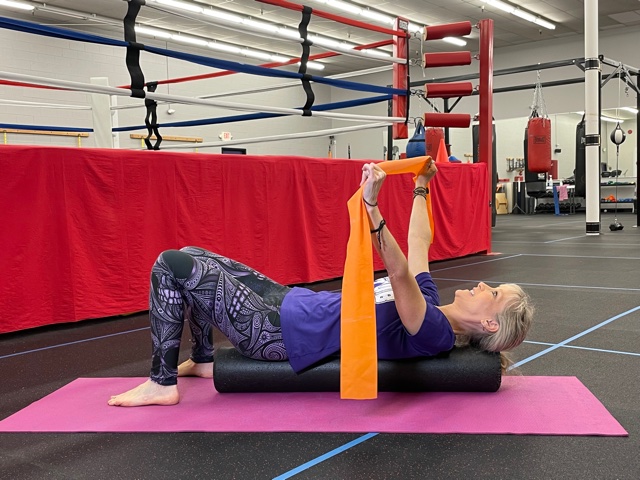
Your shoulder blades should “glide and float” on your ribcage. If you have a stooped posture, your shoulder blades can’t sit or glide normally on the ribs, causing pain in your upper back and shoulders.
If you’ve been doing the original “Open the Newspaper” exercise, now it’s time to strengthen your upper back and the rhomboid muscles between your shoulder blades using a resistance band. You’ll get all the great range-of-motion benefits for your shoulder blades, plus you’ll be working on stabilizing them, too. All you need is a full-size (36-inch) foam roller and a medium-weight band.
Continue reading “Use a Resistance Band to Correct Parkinson’s Stooped Posture”Do This Shoulder Blade Protraction-Retraction Exercise To Improve Parkinson’s Stooped Posture
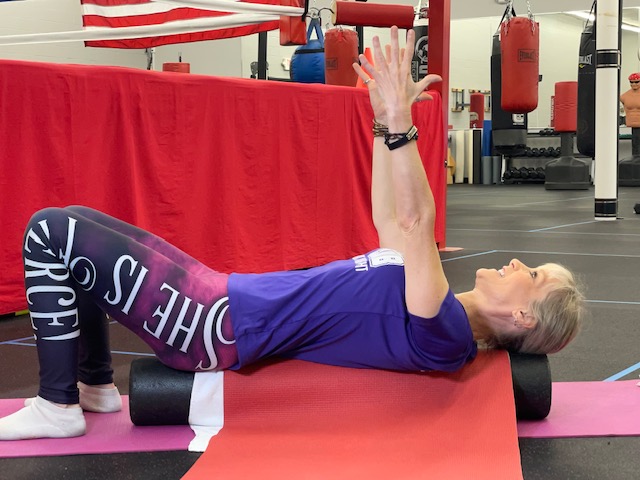
Rounded shoulders and stooped posture are common symptoms of Parkinson’s disease, and they can lead to neck, shoulder, and back pain. Routinely encouraging your shoulders, shoulder blades, and spine to move in a supported range of motion is crucial.
This Shoulder Blade Protraction-Retraction Exercise is a great way to remind your shoulder blades where neutral position is, and it promotes a healthy range of motion of the scapula. All you need is a full-size (36-inch) foam roller. A bath towel or yoga mat is optional.
Continue reading “Do This Shoulder Blade Protraction-Retraction Exercise To Improve Parkinson’s Stooped Posture”Do the Ski Jump Maneuver to Prevent Falling From Parkinson’s Disease
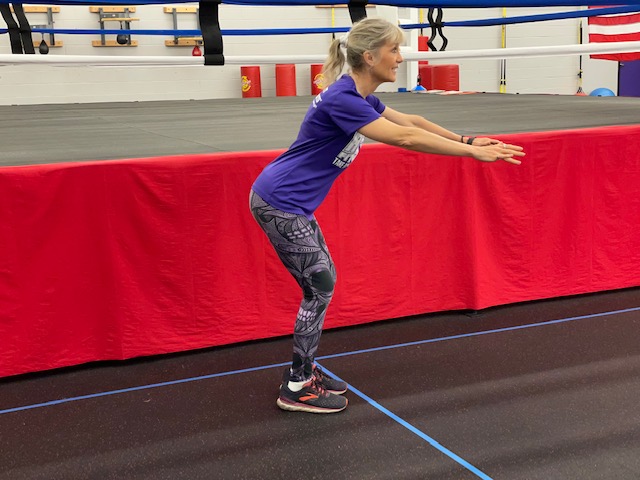
Physical therapists coined the phrase “Ski Jump” to refer to a maneuver to correct poor posture from slouching, tucking your tailbone under, or popping your rib cage up. For Parkinson’s balance issues, you find this movement most often in Tai Chi for balance classes.
I use it with my private clients, as well. I ask them to explore different positions on their feet and even in a chair. When you begin to fall, you do not have time to think about how to save yourself. You must make the rescue maneuver automatic. This requires daily practice!
Continue reading “Do the Ski Jump Maneuver to Prevent Falling From Parkinson’s Disease”Why Working Out with Others Helps Our Bodies and Minds

Whatever our age, we tend to gather around shared interests and activities like exercise, the arts, or coffee with friends. Belonging to a group can help reduce stress, enhance mood, and promote meaning and purpose. Therefore, groups also form around common struggles, like Parkinson’s disease.
These great feelings stem from the way we interact when we gather. We tell stories, laugh, sing, dance, encourage and work out together. We celebrate achievements and console those who may be sad. This behavior comes naturally in every culture.
Continue reading “Why Working Out with Others Helps Our Bodies and Minds”