SEARCH OUR AMAZING LIBRARY
OF VIDEOS AND ARTICLES TO
HELP YOU MANAGE YOUR PARKINSON’S
Blog
Are You Pulling Your Shoulders Back to Correct Your Posture? Think Again… 6 Steps To Better Posture!
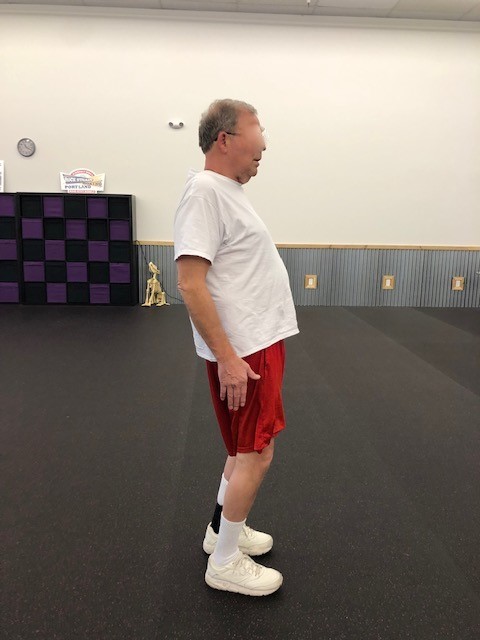
Have you been told to pull your shoulders back to correct your posture? Many of my clients with Parkinson’s disease are told, “To correct your posture, stand straight and pull your shoulders back,” or “Stand at attention like a soldier.”
Being mindful of your posture and standing straight are important, but you could be creating other orthopedic problems by doing this.
The image shown below is one of my clients demonstrating how he was told to stand straight by pulling his shoulders back. As you can see, he’s leaning way back and compressing his low back. While he was doing this, I asked him if he was comfortable. He said, “It’s hard to maintain.” Then I asked him to walk forward in that posture and he couldn’t!
While doing this he didn’t sense his body was leaning backward. Often Parkinson’s skews your proprioception (awareness of your body in space). He had been pulling back his shoulders several times a day thinking he was standing straight. When I showed him this photo, he was surprised at how far back he was leaning and how far forward his head was.
Continue reading “Are You Pulling Your Shoulders Back to Correct Your Posture? Think Again… 6 Steps To Better Posture!”Things to Consider About the Covid Vaccine and Parkinson’s Disease
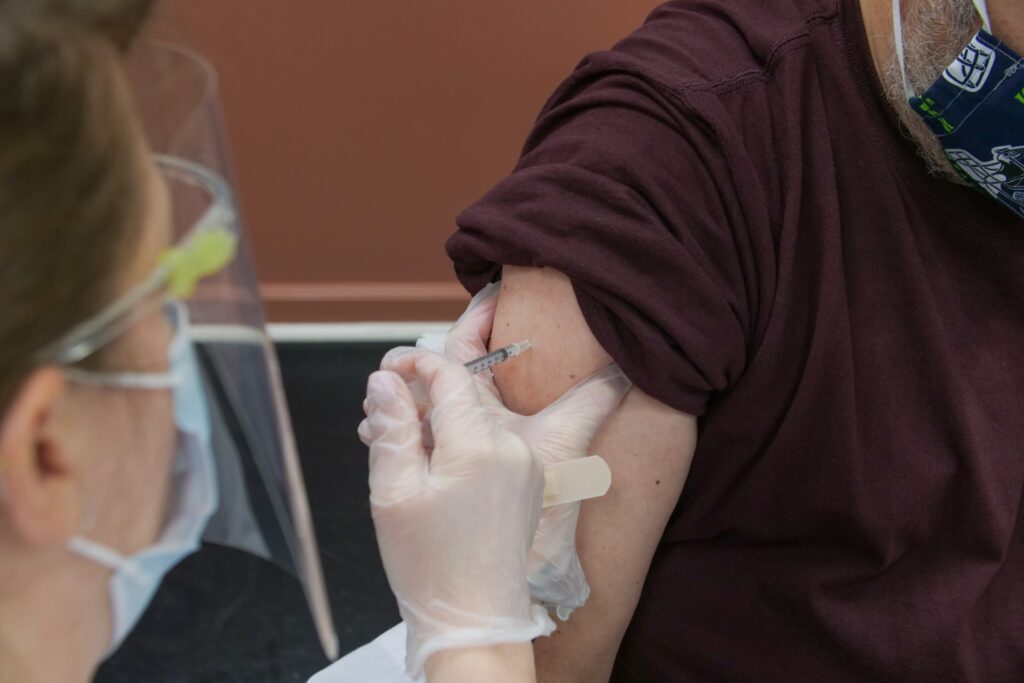
Many people have asked me to write something in regard to the Covid Vaccine and Parkinson’s disease. I personally believe that everyone should be vaccinated, but there are a few things that are important for you to know about the Covid vaccine and your after-care.
Continue reading “Things to Consider About the Covid Vaccine and Parkinson’s Disease”Do This to Work Your Voice and Memory If You Have Parkinson’s
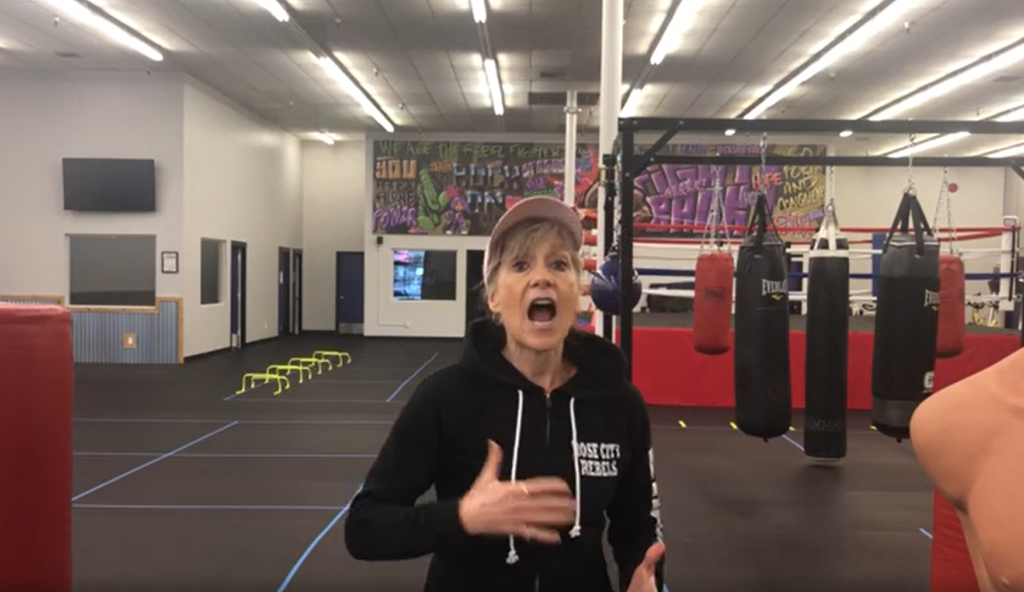
Parkinson disease affects your voice and communication in many ways. The most common issues people with Parkinson’s experience are a soft voice, mumbling, slurring and/or rapid speech.
Parkinson’s can also affect your communication in other ways. For instance, the volume you hear yourself speak may seem like yelling, but the person listening to you will say that your volume sounds normal to them.
Sometimes when you are trying to speak louder with more intent, you may lose your train of thought or the next word you were going to say.
Others tell me that while they are trying to talk loud and project, they feel like their vocal cords are becoming weak or their voice feels hoarse.
It can be frustrating trying to talk, and many times you may prefer not to. However, I would encourage you not to stay silent. Doing so can lead to social isolation. Your support partner may even start talking for you to try and help, but that actually makes the cycle worse.
If you’re experiencing any of the difficulties I mentioned above, I want you to try this exercise. It is just one of many quick, fun drills you can do to start becoming more confident speaking!
Continue reading “Do This to Work Your Voice and Memory If You Have Parkinson’s”Do This To Release Your Tight Chest and Improve Your Posture If You Have Parkinson’s Disease
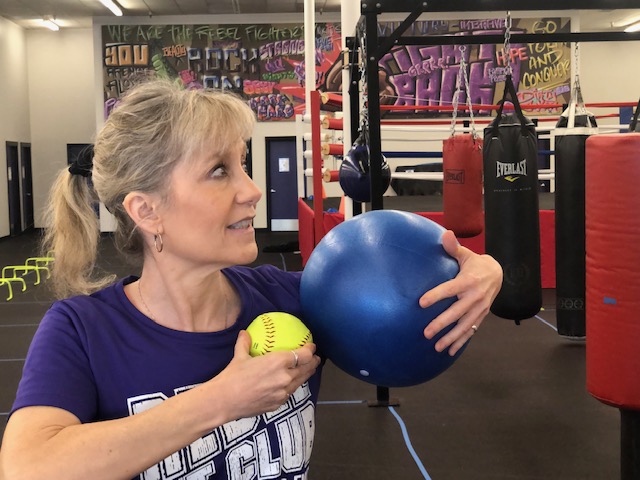
People try to stand up straight when they are stooped forward. The fact is, Parkinson’s Disease makes the pectoral muscles of the chest really tight. It’s almost impossible to straighten up because the tissue is working against you. You’ll need to break up the tight connective tissue manually, and you can do this yourself!
This self-myofascial release technique for the chest and ribs will help create better posture. It will also relive shoulder pain resulting from forward rounded posture that Parkinson’s disease causes.
This muscle group dramatically affects the function of the shoulder and balance between the front and back muscles. Parkinson’s causes the pectoral muscles to get overly tight and pull the shoulder forward, displacing the humerus (arm bone) and causing movement of the shoulder to become problematic and painful, and can cause stooped posture.
This technique is easy and only requires a soft ball and a larger inflatable ball. Self-myofascial release for the chest is a great way to help loosen those tight muscles and help you stand straighter.
Continue reading “Do This To Release Your Tight Chest and Improve Your Posture If You Have Parkinson’s Disease”How to Easily Treat Your Feet If You Have Parkinson’s Disease
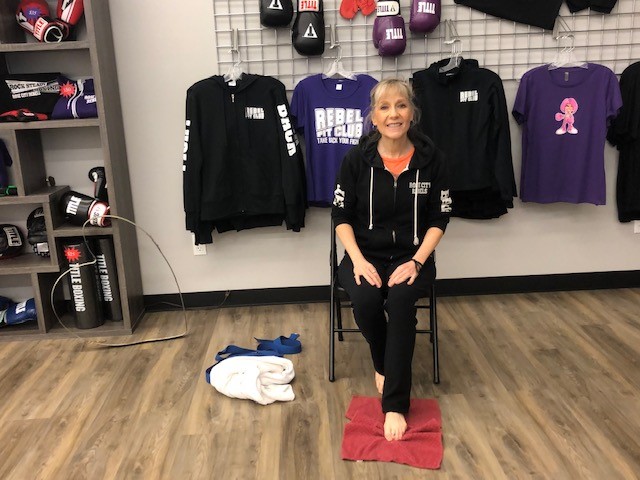
Parkinson’s Disease can cause feet to cramp, be in pain, tingle, tremor, curl up, and even experience arch collapse. This is due to neuromuscular disconnect and tight tissue. You shouldn’t ignore your feet. They’re such an important part of your body! The health of your feet affects your balance and quality of life. That’s why you need to treat your feet daily if you have Parkinson’s Disease.
Here is a quick exercise to easily treat your feet if you have Parkinson’s Disease. You only need a strap and a towel. There’s no need to reach your feet with this exercise… the strap will help you!
Watch this video to see how:
- Seated tall in a chair, grab a strap, dog leash, long belt, t-shirt or a thick bath towel and “lasso” one foot.
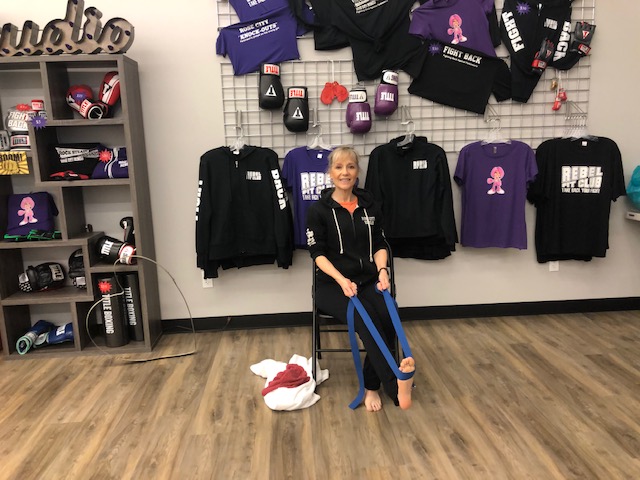
- Holding on to both ends with your foot in the strap, pull your toes back. Feel the stretch on the bottom of your foot and calf muscles.
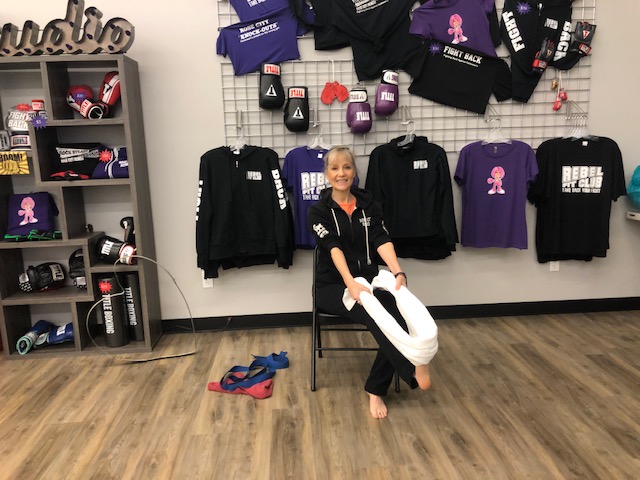
- Pull back several times and hold for 30 seconds (this should not be painful).
- Reposition the strap and keep stretching different parts of your foot. Repeat on your other foot.
- Next, take a dish towel and place it flat on the floor. The floor must be smooth (like hardwood or linoleum).
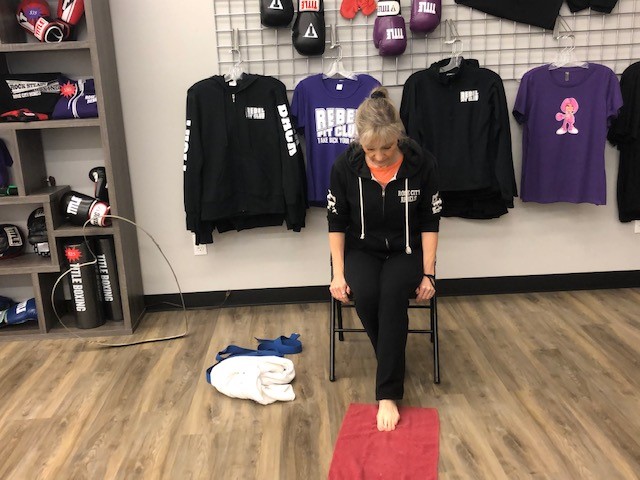
- Gather the towel under your feet with your toes. If your feet cramp, take the strap and stretch them out again. Do this several times on each foot.
Do this exercise daily, either in the evening or morning. Your feet will feel so good and it will help with your balance too.
- 💜 Coach Kimberly