fbpx

Do These Morning Bed Stretches for People with Parkinson’s Part 2

I hope you liked part one of my bed stretches series. If you missed it, the link is at the bottom of this article.

It’s so important to “lube” up the soft tissue and brain before asking your body to bear weight, walk, and perform daily activities after lying in bed for hours.

We get really stiffened up throughout the night, and many people with Parkinson’s have a bit of time before their first dose of medication takes effect. Of course, it’s easier to move during your medication’s “on” period, but you can use this waiting time to do some easy stretches.

Getting your body warmed up and primed for movement makes it easier to get around the rest of the day. Even more importantly, it could prevent an accidental fall when you stand up or start to walk.

Let’s work on this together. I’m only giving you a couple of exercises at a time. After you get used to doing them slowly, you’ll be more likely to remember how to do them. Let’s chunk it out!

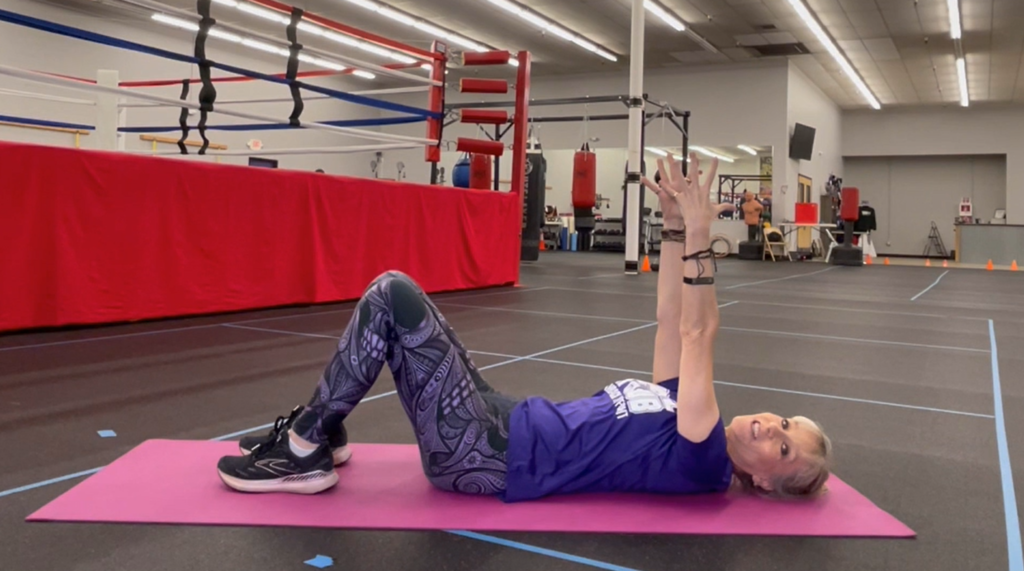
We left off with the head and eyes. I like to include the eyes because many people have trouble visually tracking. Now we are going to work on the arms and upper back.

Continue reading “Do These Morning Bed Stretches for People with Parkinson’s Part 2”
Do These Morning Bed Stretches for People With Parkinson’s Part 1

I’ve been asked many times to put together a sequence of exercises that you can do in bed before getting up in the morning. I certainly have my favorites—it’s so important to “lube” up the soft tissue and brain after lying in bed for hours!

We get really stiffened up throughout the night and many people with Parkinson’s have a bit of time before their first dose of medication takes effect. Of course, it’s easier to move during your medication’s “on” period, but you can use this waiting time to do some easy stretches.

Getting your body primed for movement will make it easier to get around the rest of the day. Even more importantly, it could prevent an accidental fall when you stand up or start to walk.

Let’s work on this together. Don’t you hate it when you are given a bunch of new exercises to do at once? I like to give no more than two or three each time.  Even if you have pictures or instructions, getting the form right can be so daunting. Let’s chunk it out!

We are going to start with the head and eyes. I like to include the eyes because many people have trouble visually tracking—for example, finding the next line down when you are reading. Getting the eyes, head, and brain all moving in sequence will help you feel more alert and improve your spatial awareness.

Continue reading “Do These Morning Bed Stretches for People With Parkinson’s Part 1”

Use This Advanced Open Book Exercise for Parkinson’s Disease

When people hire me to help them with their shoulder pain, they also ask if I can help them “straighten up” after we resolve the shoulder issue. Parkinson’s stooped posture and frozen shoulder or pain may seem like two different problems, but usually it is a cause-and-effect scenario. Poor posture leads to shoulder problems.

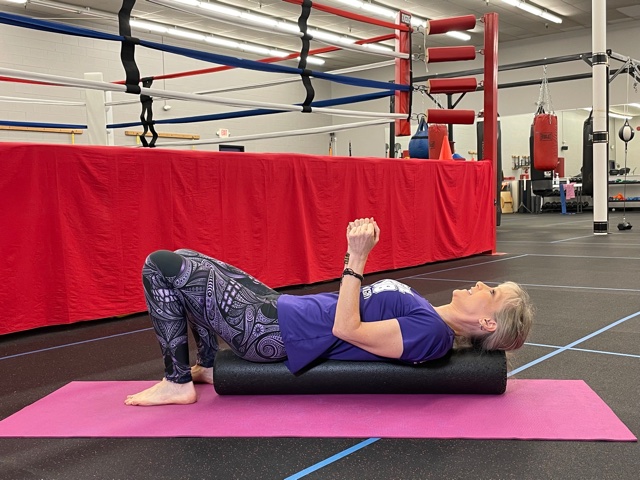
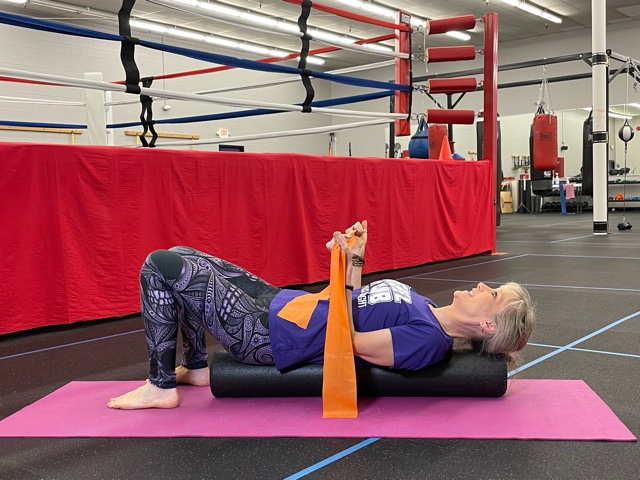
If you have a stooped posture, your shoulder blades can’t sit or glide normally on the ribs. Your chest muscles become tight and pull the shoulders and arm forward, creating shoulder pain and complications with the rotator cuff muscles. This “Open a Book” exercise on the foam roller with the added resistance band will help correct your posture by strengthening shoulder placement and the surrounding muscles.

Continue reading “Use This Advanced Open Book Exercise for Parkinson’s Disease”

Improve Your Parkinson’s Stooped Posture by Opening a Book

Many people with Parkinson’s complain of shoulder pain in addition to their stooped posture. It may seem like these are two different problems, but usually it is a cause-and-effect scenario.

Your shoulder blades should “glide and float” on your rib cage. If you have a stooped posture, your shoulder blades can’t sit or glide normally on the ribs. Your chest muscles become tight and pull the shoulders and arm forward, creating shoulder pain and complications with the rotator cuff muscles.

This “Open a Book” exercise on the foam roller will help correct your posture and shoulder placement.

Continue reading “Improve Your Parkinson’s Stooped Posture by Opening a Book”

How to Transition From “I Can’t Do It” to “I Feel Strong” if You Have Parkinson’s

Hello Fighters,

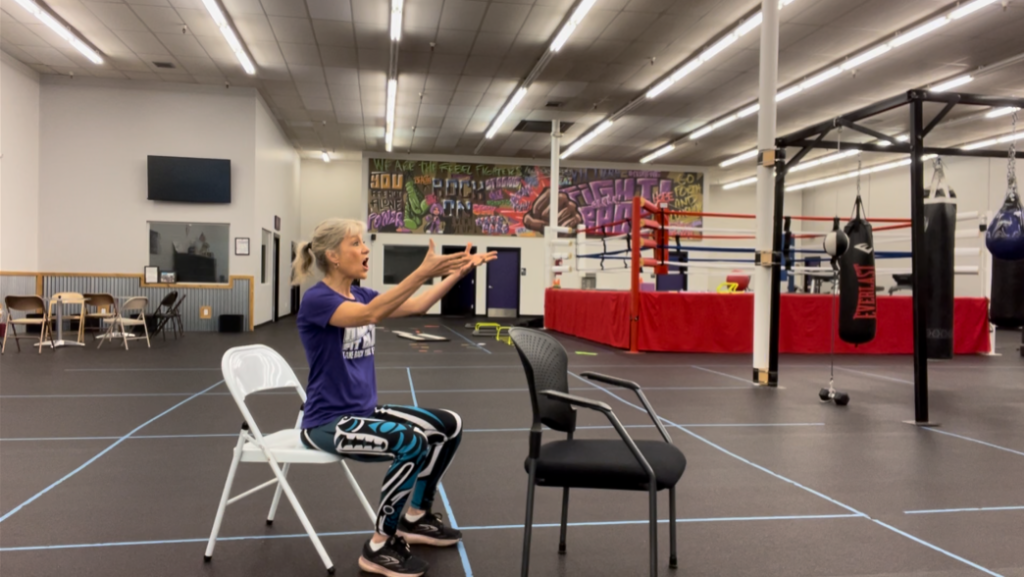
Whether you have difficulty getting out of a chair or feel like a pro doing a sit-to-stand, everyone needs to work on their form when doing this exercise. This is the number one exercise I prescribe to our fighters to do every day. It shows up in every class we teach, in a variety of formats. However, it must be done correctly and with control. I’m very picky when I’m evaluating people or when we use it in training our fighters.

Continue reading “How to Transition From “I Can’t Do It” to “I Feel Strong” if You Have Parkinson’s”