fbpx

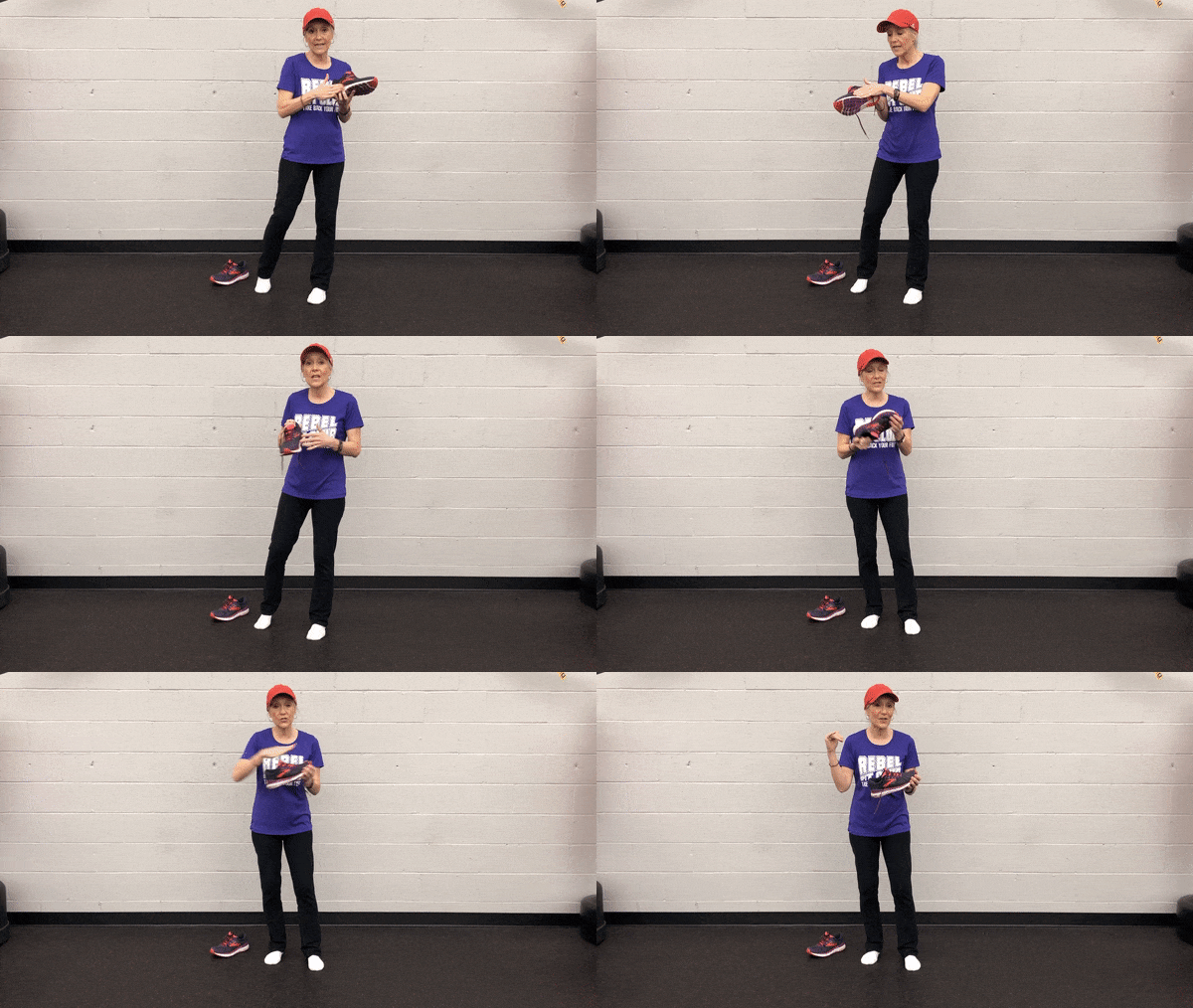
Footwear Guidelines for Active People With Parkinson’s Who Need Stability

It’s really frustrating trying to find shoes for someone with Parkinson’s disease. There are so many things to consider with an average foot, then layer neuromuscular issues on top of that, and it can become almost unbearable to shop for shoes.

When shopping for shoes, often a shoe store clerk will not understand the needs of someone with PD. These guidelines are for active people, but make sure you explore many shoes before deciding. Just because they are comfy doesn’t mean they are a good fit for your foot or your gait. Sloppy slippers are comfy, but that doesn’t make them good for you. Shoes should help correct your biomechanics, including gait. Shoes that are not fitted properly can cause you to trip or create faulty movement patterns.

Continue reading “Footwear Guidelines for Active People With Parkinson’s Who Need Stability”
Try This Sit-Stand-Walk Exercise To Treat Parkinson’s Gait Freezing

A common scenario for freezing is getting up from a chair and starting to walk. Initiating the first step often brings on freezing. When you add getting up from a seated position, it’s a double whammy!

This Sit-Stand-Walk exercise is a great repetitive drill that has helped so many of my fighters with their freezing. We use it in our classes, even our online high-intensity boxing workouts. I love helping someone who is having difficulty find a practical solution. Overcoming something that previously made you fall improves your quality of life and feeling of empowerment!

Continue reading “Try This Sit-Stand-Walk Exercise To Treat Parkinson’s Gait Freezing”

Want to Know How to Improve Your Balance If You Have Parkinson’s? It’s a Multisystem Process.

Because of the quarantine and lack of exercise many people with Parkinson’s are falling more these days. I decided to do these quick beginner exercises to get you started improving your balance.

Your balance is a process of many systems working together to hold you upright. Your eyesight, ears, muscles, tendons, joints, and nervous system send messages to your brain. The basal ganglia is the balance center of the brain and also the part of the brain most affected by Parkinson’s.

Is it any wonder why people with PD fall so much? The body tries to compensate by using other parts of the brain for balance, and all that does is disrupt other systems, like thinking and executive functioning.

The only thing that significantly helps with balance is specialized coaching and exercise. Your medication will not help you with balance. Once again, it is movement (nature’s cure-all) to the rescue!

Continue reading “Want to Know How to Improve Your Balance If You Have Parkinson’s? It’s a Multisystem Process.”

How to Safely Use a Foam Roller for Parkinson’s Stooped Posture

“Kimberly, what can I do to straighten up? I feel like my posture is getting worse!” This is a very common question and concern for people with Parkinson’s.

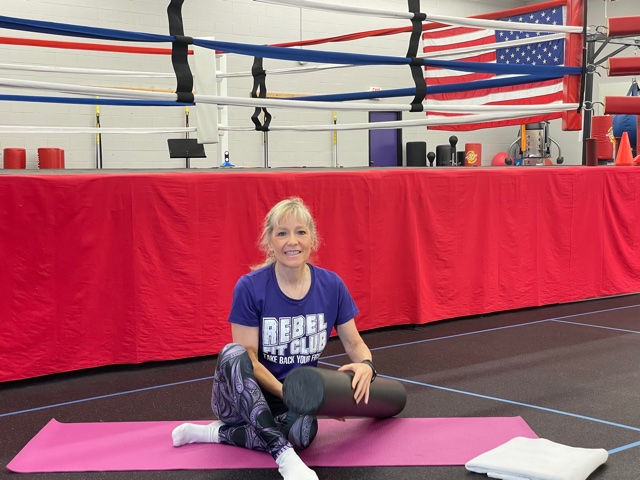
Parkinson’s disease causes your chest muscles to tighten, creating a flexed-forward posture. This creates a host of problems, including back pain. You can use a foam roller to facilitate some great extension in your muscles, improving pain and your posture. I’ll show you how to use a bath towel to keep the roller in place.

Continue reading “How to Safely Use a Foam Roller for Parkinson’s Stooped Posture”

Kitchen Safety for People with Parkinson’s

I was interviewed by Epicurious cooking magazine in response to an article I did on Kitchen Safety for People with Parkinson’s. (Scroll down to see the Epicurious article.)

Here is my original article with a few updates:

Being creative in the kitchen is important to so many people with Parkinson’s. Meal prep can be exhausting, challenging and dangerous. Let’s make it as safe and easy as possible so you can keep cooking for the people you love.

Because of tremors and balance issues, the risk of having a kitchen accident is greater for people with PD.

Here are my favorite kitchen ideas used by occupational therapists and tested in the kitchens of my fighters and dancers with Parkinson’s.

Continue reading “Kitchen Safety for People with Parkinson’s”