fbpx

Must-do Pendulum Stick Stretch for Parkinson’s Stooped Posture

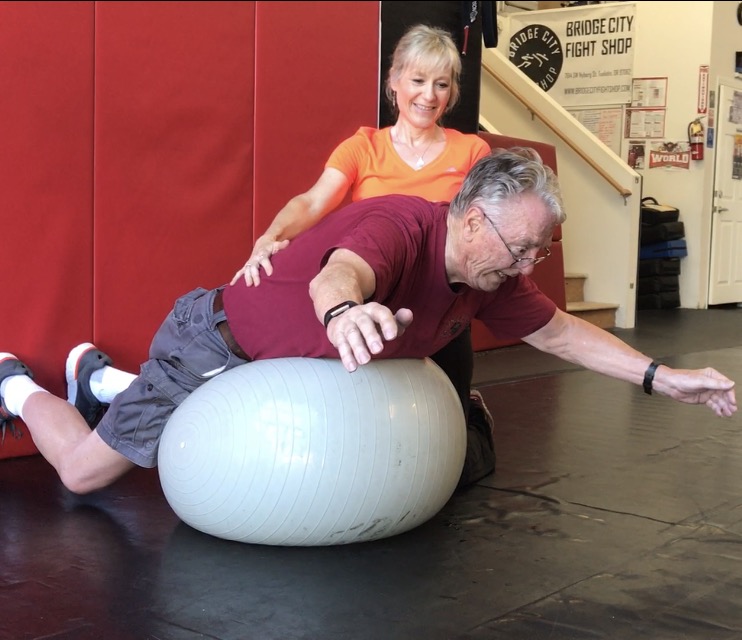
When Parkinson’s makes you feel stiff and causes your posture to stoop forward, a cascade of problems occurs, leading to pain and mobility issues. Routinely encouraging your shoulders, shoulder blades, and spine to move is crucial to counteracting the stooped posture and associated pain that are common in Parkinson’s disease.

Reaching overhead and swinging your arms out to the side is a complex movement, requiring the coordination of multiple parts of your skeleton. Your shoulder blades (scapula) and arm bones (humerus) must work together in a simultaneous, synchronized pattern.

If you have a stooped posture, your shoulder blades can’t sit or glide normally on the ribs, causing pain in your upper back and shoulders.

The “Pendulum Stick Stretch” exercise is great for stretching your shoulders and upper back and regaining valuable range of motion.

Continue reading “Must-do Pendulum Stick Stretch for Parkinson’s Stooped Posture”
Six Must-do Steps to Combat Parkinson’s Decline

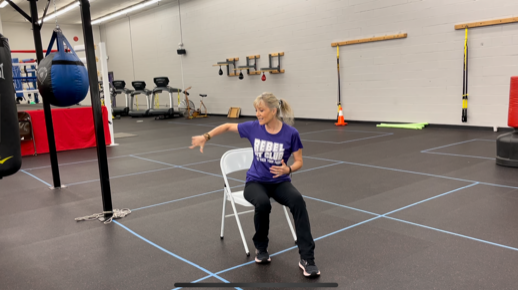
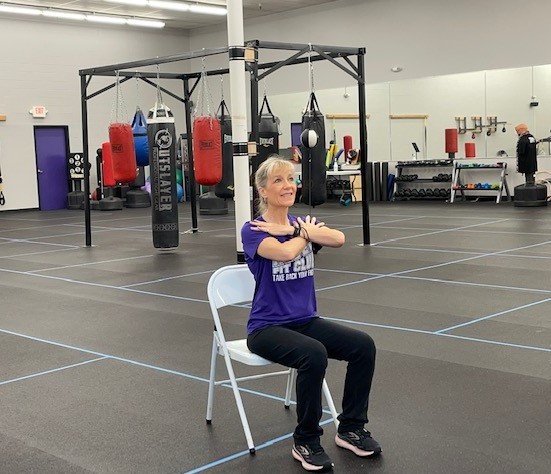
Here we are: the full routine in this series to get everyone up and moving! No more sitting for hours on end. Being sedentary will make your Parkinson’s progress more quickly.

Many of our new fighters tell me they sat too much last year and watched TV, their backs hurt, and they were too tired to exercise. It’s a vicious cycle: the more you sit, the stiffer you get, and then you don’t feel like exercising.

Here is a great six-step routine to get you out of your chair and moving. You can still sit and watch a show, but you must take fitness breaks! This routine works your whole body and brain. It addresses freezing, creates more power in your hips, promotes flexibility, and uses your voice.

Continue reading “Six Must-do Steps to Combat Parkinson’s Decline”

Why You Must Do the Sit-to-Stand Exercise if You Have Parkinson’s

We are off to a great start! Those who watched my seated chair hinging video (listed below) wanted more.

Here is a request from one of my readers: “Hi Kimberly, now that you taught us how to sit properly, it might be helpful to show us how to stand properly, either to prevent falls, or to be more active.”

Continue reading “Why You Must Do the Sit-to-Stand Exercise if You Have Parkinson’s”

These 10 Exercise Components Are Needed To Slow Down Parkinson’s

You might be thinking, “I don’t have time for exercise,” or “I’m too tired to do this every day.” Maybe you’re wondering, “What’s the bare-bones minimum amount of exercise I need to do?” Unfortunately, this approach will NOT get you the results you need or want.

A better response is: “Put me in, Coach!!!”  How much, what kind, how long, and how often? Answering these questions will help you slow down this disease so that you can get your life back.

Check your current exercise routine. Be honest: are you doing all of the things you need to create brain change and slow down Parkinson’s?

Continue reading “These 10 Exercise Components Are Needed To Slow Down Parkinson’s”

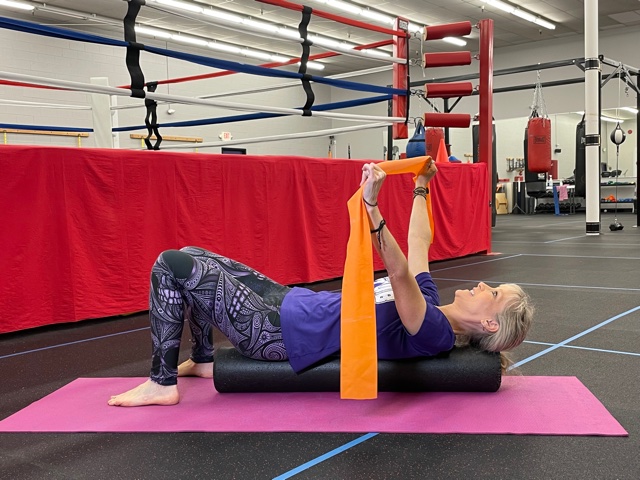
Use a Resistance Band to Correct Parkinson’s Stooped Posture

Your shoulder blades should “glide and float” on your ribcage. If you have a stooped posture, your shoulder blades can’t sit or glide normally on the ribs, causing pain in your upper back and shoulders.

If you’ve been doing the original “Open the Newspaper” exercise, now it’s time to strengthen your upper back and the rhomboid muscles between your shoulder blades using a resistance band. You’ll get all the great range-of-motion benefits for your shoulder blades, plus you’ll be working on stabilizing them, too. All you need is a full-size (36-inch) foam roller and a medium-weight band.

Continue reading “Use a Resistance Band to Correct Parkinson’s Stooped Posture”