fbpx

One Easy Home Exercise to Add to Your Treatment for Parkinson’s Frozen Shoulder

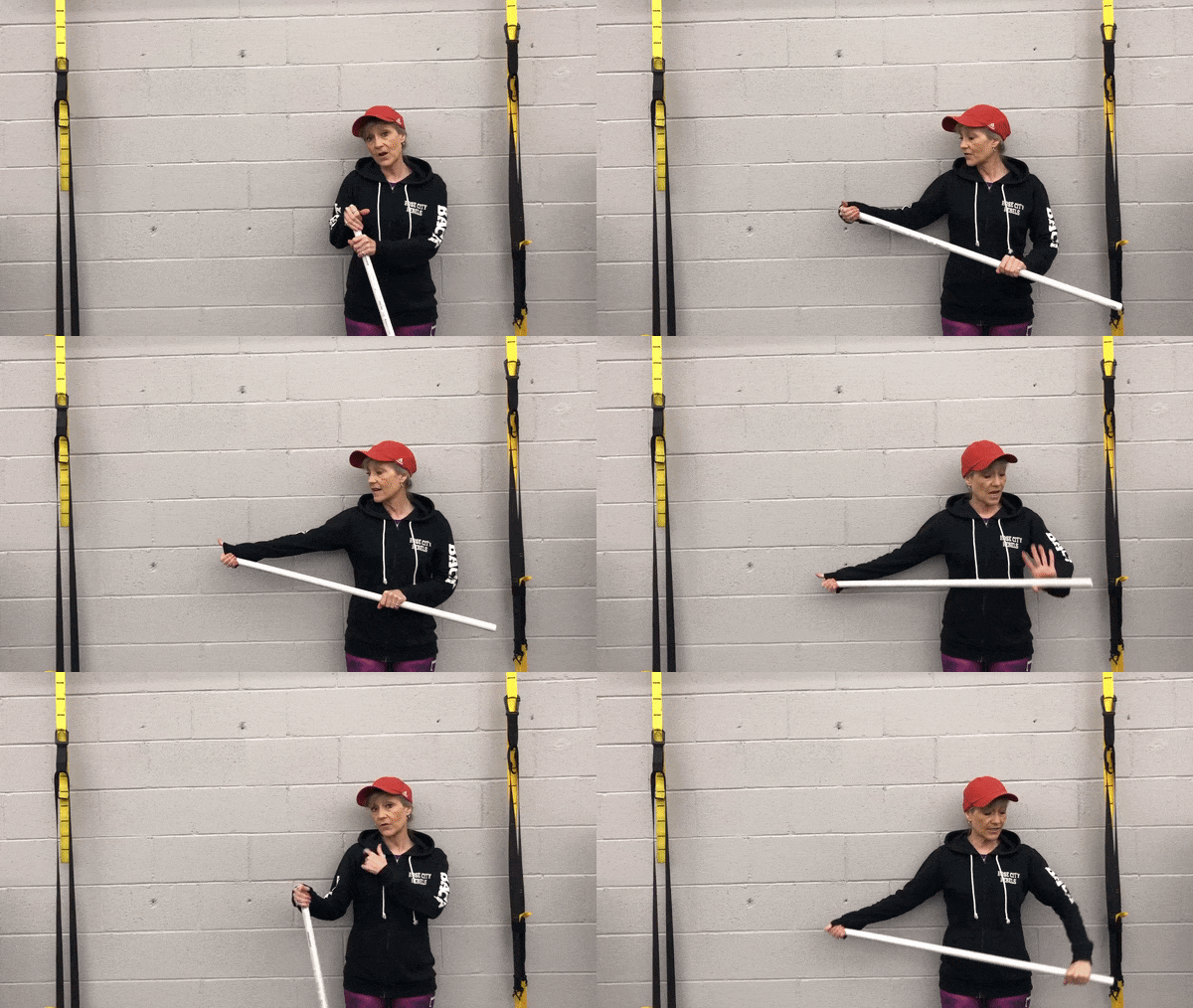
For people with Parkinson’s, frozen shoulder (adhesive capsulitis) can come out of nowhere and slowly get worse. It’s more common for people with Parkinson’s because of their small arm movement, or lack arm movement. This not only affects the shoulder capsule, but it involves the shoulder blades and other surrounding structures as well.

Unfortunately, Parkinson’s frozen shoulder doesn’t get better on its own. It takes patience, persistence, and daily home exercise to encourage the joint to move normally again.

Continue reading “One Easy Home Exercise to Add to Your Treatment for Parkinson’s Frozen Shoulder”

Do You Have Tight Frozen Parkinson’s Shoulders? Learn to Treat It by Yourself At Home!

Frozen shoulder (adhesive capsulitis) is very common in people with Parkinson’s. This condition causes pain, stiffness, and loss of normal range of motion in the shoulder. The resulting disability can be serious, and the condition tends to get worse with time if it’s not treated. It usually affects people ages 40 to 60, and women more often than men.

For people with Parkinson’s, frozen shoulder can come out of nowhere and slowly get worse. Often, frozen shoulder occurs because the shoulder has been immobilized for a long time by injury, surgery, or illness. Fortunately, the shoulder can usually be unfrozen! Full recovery takes time and a lot of home exercise.

Continue reading “Do You Have Tight Frozen Parkinson’s Shoulders? Learn to Treat It by Yourself At Home!”

Easy Seated Mid Back Stretch for People with Parkinson’s

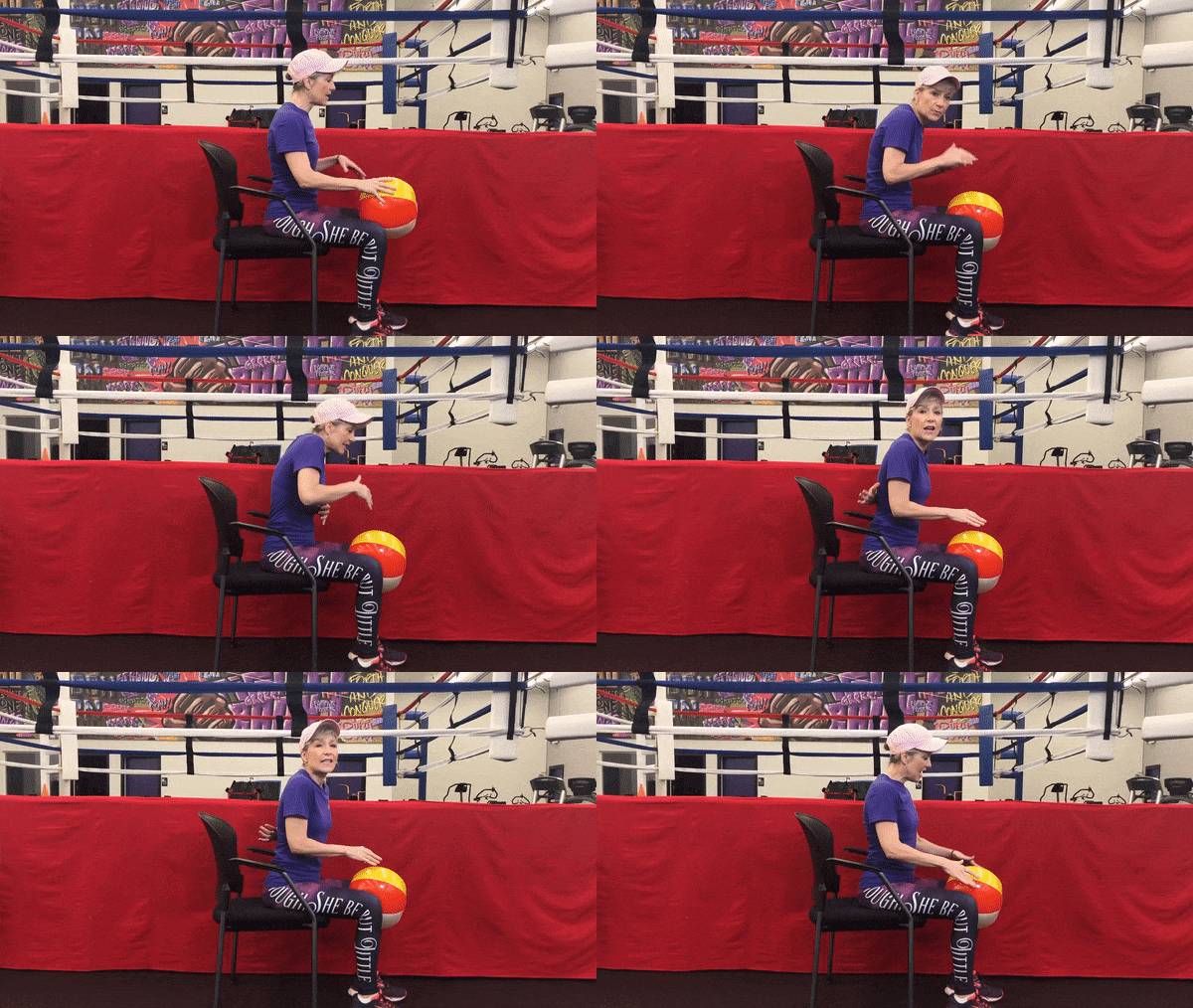
Most back stretches target the low back. Since mid-back pain is mostly caused from stooped posture, I’ve created an easy seated mid back stretch for people with Parkinson’s, but anyone can benefit from it. I love it because all you need is a straight back chair and an inexpensive blow up ball.

Mid back pain usually occurs from stooped posture due to Parkinson’s. This anterior pulling is caused by tight chest muscles rounding the thoracic spine (upper back). It can also happen to anyone sitting, stooped forward too long.

Most mid back stretches are performed on the floor or standing, but this one is done seated, and can easily help individuals in wheelchairs too.

Continue reading “Easy Seated Mid Back Stretch for People with Parkinson’s”

How To Gently Release Tight Parkinson’s Hip Flexors

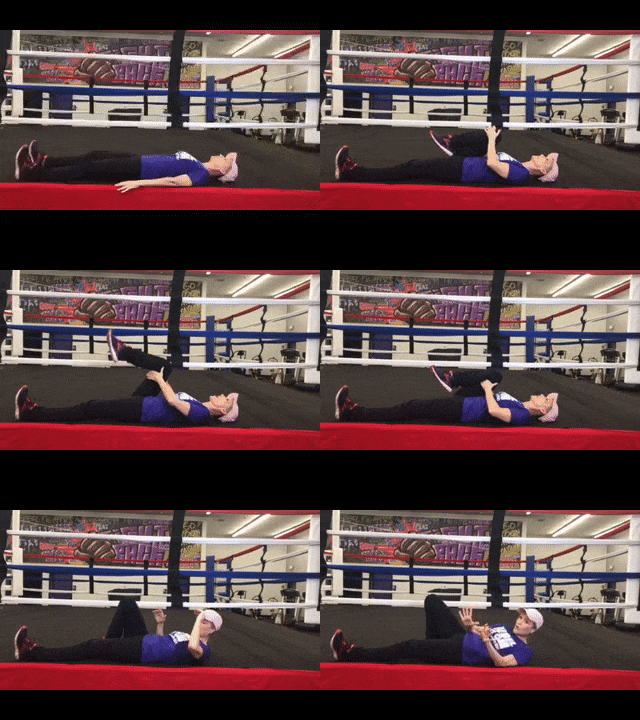
A common problem with Parkinson’s is very tight hip flexors that slowly draw the body forward, creating part of the stooped posture. These tight muscles in the front of the hips cause a host of problems such as painful hips and lower back, lack of leg swing, and a feeling of heavy legs to name just a few. We often use static stretches or myofascial release to try to get them to relax.

Continue reading “How To Gently Release Tight Parkinson’s Hip Flexors”

New Study Shows Walking This Much Extends Your Life

We know exercise is the only known way to slow Parkinson’s disease, and the more specific the Parkinson’s training is, the better the outcomes. A recent study from the American Cancer Society followed 140,000 older adults and found that those who walked six hours per week had a lower risk of dying from cardiovascular disease, respiratory disease, and cancer than those who were not active. However, walking even as little as two hours per week could begin to reduce the risk of disease and help you live a longer, healthier life.

Continue reading “New Study Shows Walking This Much Extends Your Life”