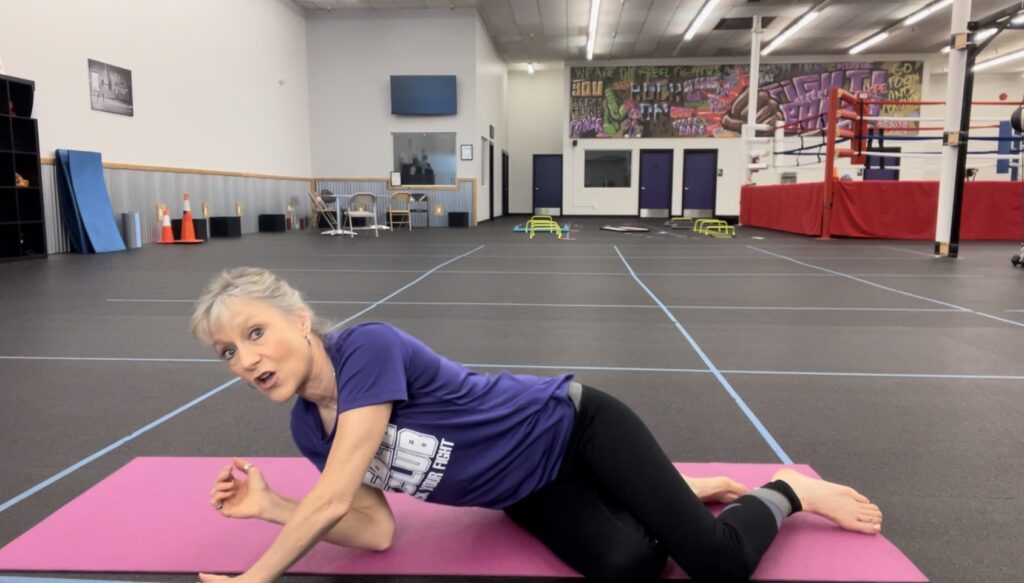
We have a few basic movement rules at the Rebel Fit Club, one being that you don’t use your legs to get yourself up from a lying position. Many people have never learned how to safely get up from lying down. The default is to use your legs as giant levers and heave yourself up with force. You might not think you’re hurting your back, but every time you do this, it’s like a ticking time bomb just waiting to go off.
This is
one of my favorite topics, and it was brought up by one of my favorite people.
He is a fighter in our Parkinson’s boxing class and a personal training client
at the Rebel Fit Club. He was diagnosed in 2012 with Parkinson’s and is a
retired Physical Therapist. Because of his prior career experience, he is
especially great at giving me feedback on what he’s feeling and his
frustrations.
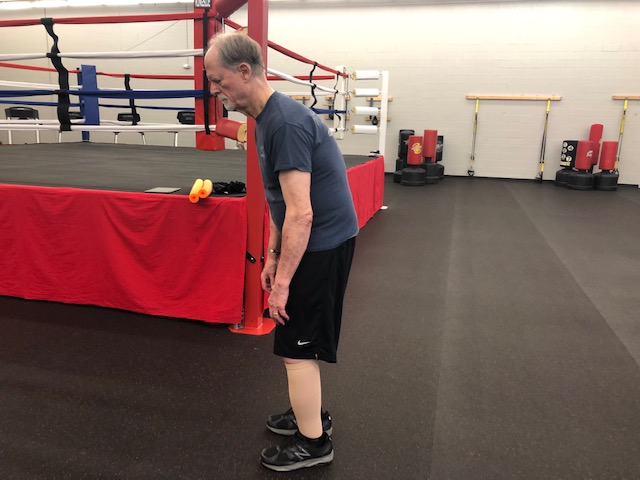
This
picture was taken before a personal training session with me a few days ago.
Even after our boxing class filled with specific exercises to offset the
symptoms of PD, he still couldn’t stand up straight and complained of heavy
legs. Anyone who has taken a class from me knows I’m a stickler on form, and
constantly drive home that “bad form creates new issues and exacerbates current
ones”.
If the
muscles are tight and bound up, the fascia is also. His anterior flexion
muscles and other tissues were tight, making it very difficult for him to stand
up straight. The posterior extension muscles were weak and in a state that
makes it hard to activate them. My client said, “I’m trying to straighten up,
but I can’t.” Because of this, his back hurts and he is at risk of falling
forward. The before picture might look like he’s exaggerating and rounding
forward on purpose, but this is how he started and could not straighten
up. You may think, he’s stuck like that permanently, just watch.
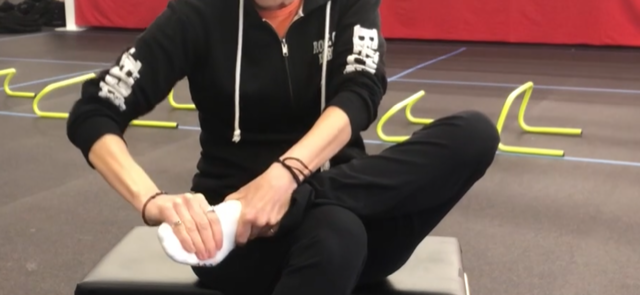
My fighters and dancers with Parkinson’s asked me to create a myofascial release video specifically for feet. Your feet take a beating and are often neglected. With Parkinson’s cramping, neuropathy and a host of other painful ailments are often present.
I get asked a lot about what I recommend. I know with my own feet I have abused them over the years from dancing and wearing high heels. They need a lot of love!
One of my fighters asked me for an exercise someone with Parkinson’s could do on a plane or long car ride to offset the stiffness that happens when they sit for too long. I gave him a simple solution for stiffness that comes with two additional benefits: it can help prevent blood clots in your legs and strengthen your glutes to help with balance. Wow! Best of all, anyone can do it, and everyone should.
I want you to do this exercise any time you are sitting for longer than 30 minutes. You need to take “Glute Squeeze” breaks. Yes, even while sitting and watching TV!
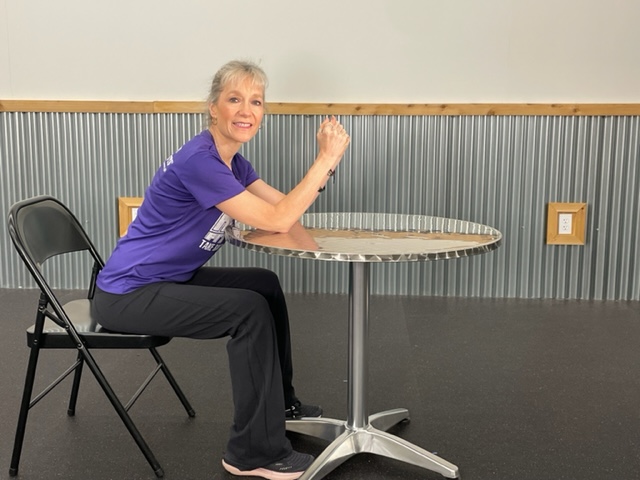
I recently received another great request from my readers: “Kimberly, would you do a video of a simple, quick stretch for my upper back that I can do at my desk?”
Yes, here you go! This one is quick, easy, and feels really good. Best of all, you don’t have to get on the floor.