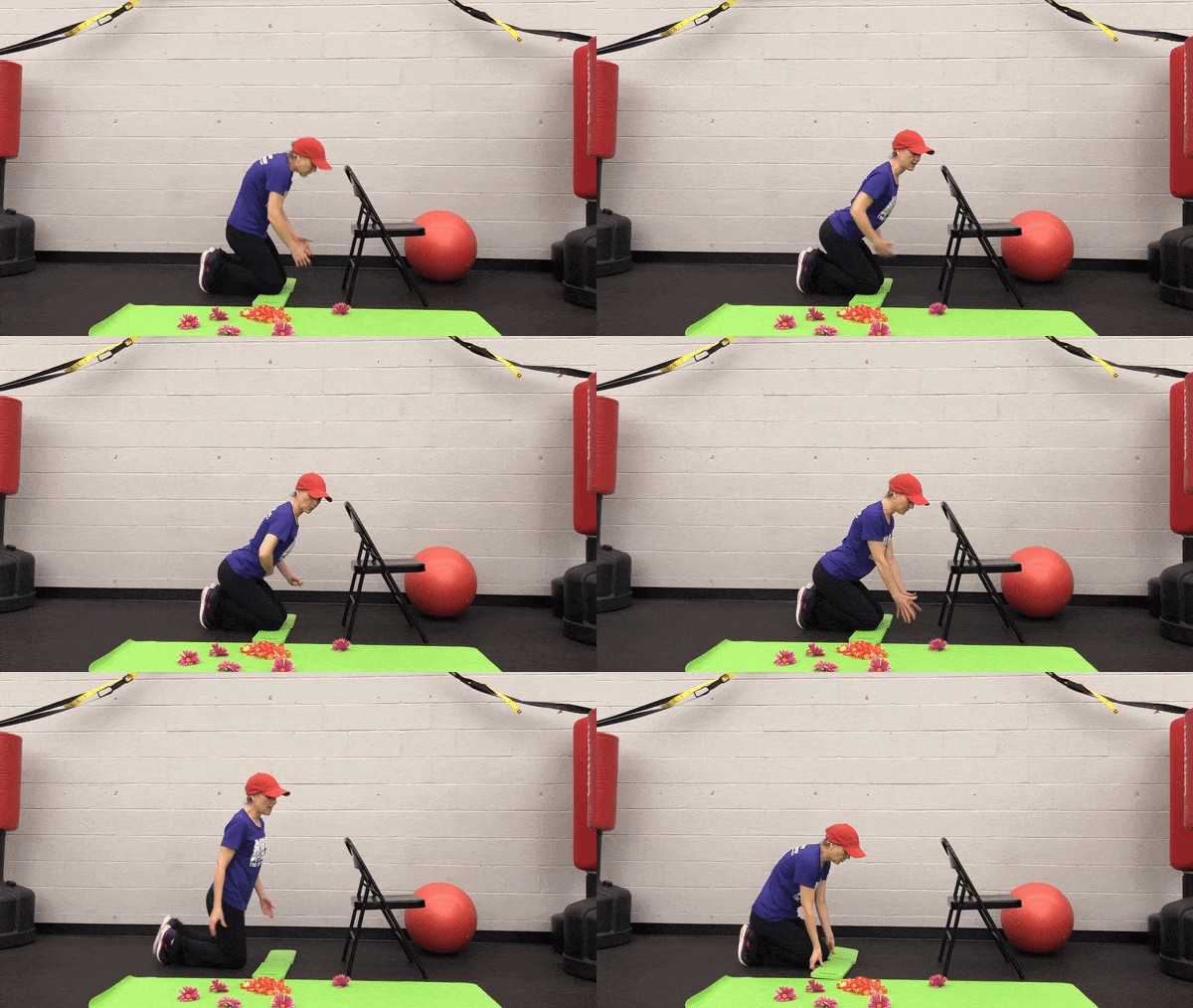
How Can I Comfortably Sit On The Floor When My Parkinson’s Makes Me So Stiff?

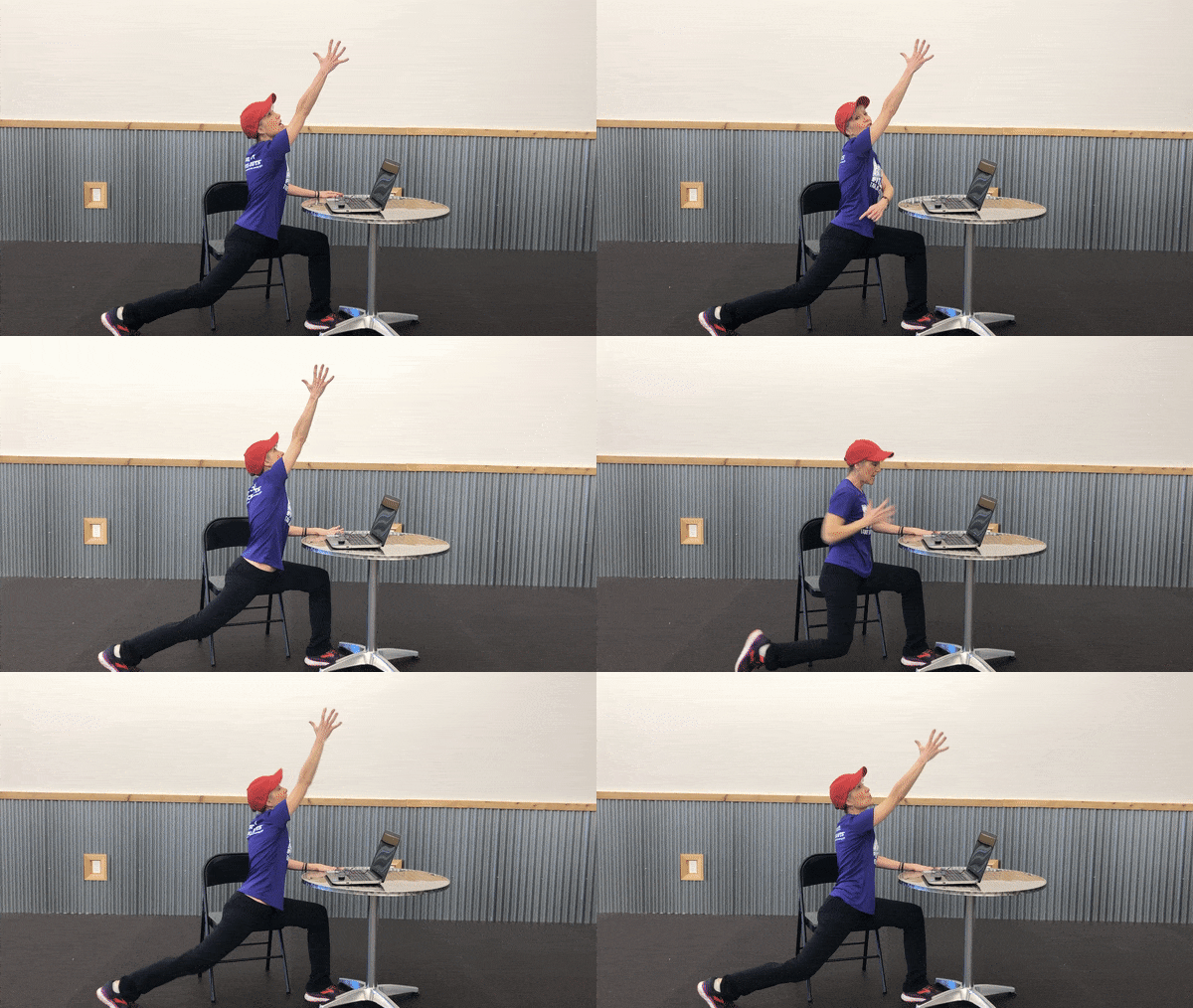
Another question I was recently asked by one of my fighters was, “I want to sit on the floor to meditate, but how can I meditate if I’m not comfortable?” What a great question!

Sitting on the ground is very good for the body, but people with Parkinson’s struggle with this. Their bodies are so tight, so they rarely sit on the ground. It becomes a vicious cycle.

I realize not everyone can safely lower themselves to the ground. (See last week’s blog post on proper sitting in a chair) While my wish is for everyone to regularly get up and down off the ground, I know that it just isn’t possible, especially as we age.

For those who can get to the ground, if you are stiff, it makes floor sitting very uncomfortable and creates bad posture that is harmful to your lumbar spine.

However, I have a simple solution for sitting on the floor correctly! Don’t risk hurting your back. It’s easy to modify. Yogis have been doing this for hundreds of years, and you may have been suggested this strategy in an adaptive yoga or Pilates class.

Continue reading “How Can I Comfortably Sit On The Floor When My Parkinson’s Makes Me So Stiff?”

My Back Hurts, Is It My Chair? Proper Sitting Posture for People with Parkinson’s (Part 1)

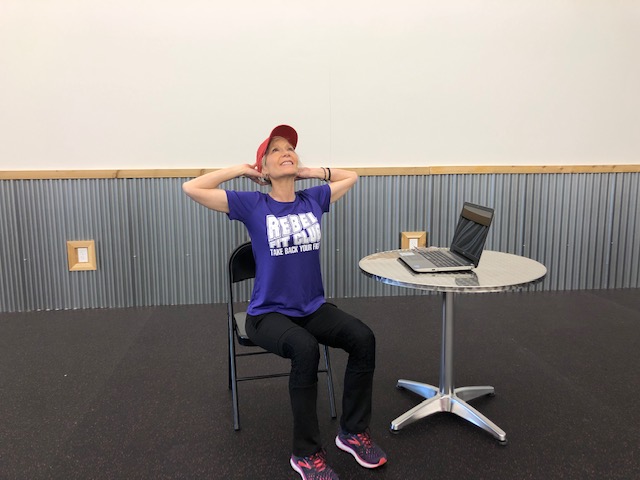
This week 3 different people in my Parkinson’s exercise classes asked me about proper sitting posture. If you do not have PD, keep reading, this information is for everyone. You may need to improve your own sitting posture. I will spend the next couple of weeks talking about posture.

Question 1: When I’m sitting my back hurts… Is it my chair?

Proper sitting posture is a combination of the chair and your body alignment, but mostly the later. I’ve sat in terribly designed chairs and was able to align my body correctly, but I sure wouldn’t own a chair like that.

I will start with alignment, since the answers to these questions will all fall back on these rules.

Continue reading “My Back Hurts, Is It My Chair? Proper Sitting Posture for People with Parkinson’s (Part 1)”

I Fell and Hit My Head… Is This a Concern?

Two of my students with Parkinson’s hit their head at home recently. One tried to break through a freezing gait and fell, hitting his head and hand. The other came up under a cupboard that was open, and the impact split the skin on her scalp. I thought this was a good topic to cover since we do have falls from time to time in class. I am referring to the Mayo Clinic page as a reference.

Rarely does a bump on the head result in serious injury. Injuries to the forehead and scalp often result in a lot of bleeding under the skin because there is a rich blood supply to this area. When the bleeding is in just one area, it causes bruising and swelling (hematoma).

Even a minor head bump can cause a large amount of swelling. Speed, momentum, size of the person, and the surface hit (concrete floor vs carpet) may increase the possibility of serious injury.

Continue reading “I Fell and Hit My Head… Is This a Concern?”

Want to Reverse Signs of Aging in the Brain? Dance!

When I do a Parkinson’s assessment, I am testing the individual’s multitasking ability by asking them to follow a rhythm (metronome) in multiple ways. They do upper body, clapping, walking, marching, and I add on layers of movement. Then I ask, “Do you enjoy dancing?” So often they respond with “Yes, I did. But now I can’t.” Sometimes they say, “Now I just look dumb.”

If you know me, I am not going to let this topic rest. I have to remind them that I just saw them duel-tasking to a beat, so yes, they can still dance! They are just out of practice and lost some of their confidence.

Individuals and/or couples often don’t dance unless they are at a wedding, or in front of people without PD and are self-conscious. Well guess what? All that’s needed is a little bit of practice, just like any other skill. You can dance at home with your sweetheart (it’s fun!) or take a dance class with us!

Yet another study has been published showing that dance can reverse the signs of aging in the brain! We’ve known for years that exercise can improve age-related brain degeneration and cognitive impairment through neuroplasticity. This is especially true of dancing because it requires more than just motor skills; there is more “thinking” associated with it. Dancing is fun and great for your brain!

Continue reading “Want to Reverse Signs of Aging in the Brain? Dance!”

Tips to Combat Parkinson’s Rounded Posture and Tucked Pelvis with Hip Hinging

Last week we talked about rounded posture and tucked pelvis that often results from Parkinson’s disease. What can we do about it? We fight with squats!!

Hip hinging (squatting with proper form) is a great way to counter act this.

With proper hip hinging, it allows the sacrum and tail bone to hinge outward like it is supposed to. The trick is to start early, before the bones of the lower back start to fuse in this stooped position. However, even people with advance stooped posture can benefit from this exercise. By sticking your “tail feathers” in the air as you squat back, it gives you access to your glute muscles and helps restore normal curves in your spine. It also reminds the leg bones where they are supposed to be in the pelvis, so walking can improve.

I start all my clients with or without Parkinson’s with hip hinging. This is the most important exercise to do for better posture, balance and fall prevention.

Continue reading “Tips to Combat Parkinson’s Rounded Posture and Tucked Pelvis with Hip Hinging”