It’s All About the Base When Teaching People with Parkinson’s to Hinge

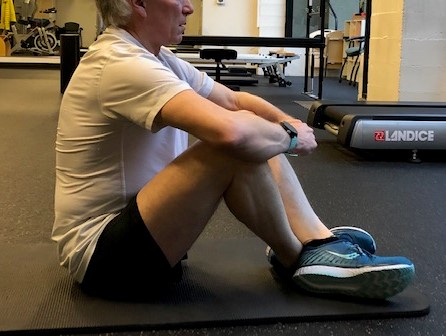
It is all about the base when teaching people with Parkinson’s to hinge at the hip, and by “base” I mean hips or your tail-end.  Hip hinge (proper squatting form) is probably the most important movement principle to train for balance and to maintain independence.

We need proper hip hinge and pelvic placement to bend, sit in a chair, walk, stand, etc.

It is the foundation of movement. With Parkinson’s, so often I see the pelvis tucked under in a posterior tilt. The person is basically “sitting” on their tail bone vs having it out and behind their body. This fixed tucked position is very dangerous for backward falling and serious injury to the low back. Very often the person complains of low back and hip pain because the lumbar curve (your shock absorber) is almost eliminated. This posture also creates a faulty gait pattern.

Therefore, I always start my clients out with hip hinging in my private practice. Turning on the glutes and getting that tail out is key to any training program. If this faulty pattern is allowed to continue, the knees will stay bent during all phases of walking (to maintain balance). The person’s weight would have completely shifted to the heels, making them a huge risk for falling backwards. To compound the problem even further, these individuals usually have a rounded upper back and forward head to counterbalance their weight being drawn backward.

It happens so gradually that the person isn’t even aware it’s happening until they have pain or balance issues. Some clients don’t know what I’m talking about until I show them a picture.

Continue reading “It’s All About the Base When Teaching People with Parkinson’s to Hinge”

Is Excessive Sweating a Symptom of Parkinson’s

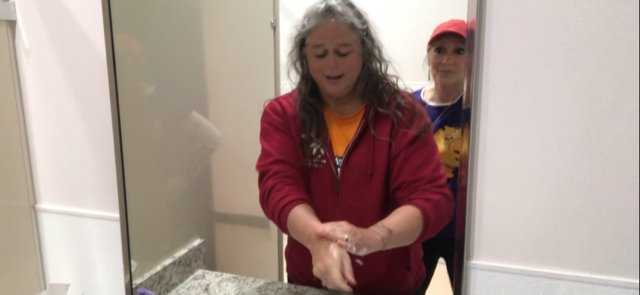
Quite often people ask me if excessive sweating is a symptom of Parkinson’s Disease. Women ask me the most, and not because this happens more frequently to women, but because women are more surprised by these mystery “hot flashes”. 

Sweating is controlled by the autonomic nervous system (ANS) which also controls other unconscious body actions, like heart and respiratory rate, digestion, urination etc. 

The ANS can be (and usually is) affected by Parkinson’s, causing people to suddenly sweat excessively which can cause blood pressure to drop. It can also cause one to sweat too little, or not at all. This leaves skin really dry, and puts people at risk for overheating. Both can really impact quality of life. 

Continue reading “Is Excessive Sweating a Symptom of Parkinson’s”

Baby It’s Cold Outside, but Take Your Hands Out of Your Pockets

I see this all the time, and it drives me crazy! People walking around with their hands in their pockets regardless of whether it’s cold out or not. What’s so bad about walking with your hands in your pockets? Two of my friends have fallen while their hands were in their pockets. One lady was hiking, one hand in her pocket, and fell and broke her nose. The other was walking in the dark after a basketball game, didn’t see the curb, and fell and broke his jaw and teeth. Both individuals were in their 20’s and did not have Parkinson’s disease.

If you are standing or sitting it’s not terrible to have a hand in your pocket, but once you start moving you should pull your hands out and swing them by your sides. 

People with Parkinson’s are more likely to put a hand or two in their pockets because of a tremor. They feel like it either conceals the tremor or quiets it down. I understand the temptation, but it’s dangerous. 

Continue reading “Baby It’s Cold Outside, but Take Your Hands Out of Your Pockets”

Alert! Deep Brain Stimulation and Swimming May Not Mix

The medical community is asking health care professionals to post a warning to those who have had deep brain stimulation (DBS) surgery that they could be at risk for drowning.

Here is the warning:

 “Patients and neurologists should be aware of the potential loss of the ability to swim following subthalamic DBS, we warn all patients to be cautious when going into deep waters.” Dr. Christian Baumann, a neurologist at University Hospital Zurich.

Medtronic posted an “Urgent Field Safety Notice” , warning that a side effect of brain stimulators might leave a patient unable to swim.

These are a few examples of the reports:

Continue reading “Alert! Deep Brain Stimulation and Swimming May Not Mix”

This Is the Most Valuable Exercise Investment for People with Parkinson’s

My fighters and dancers often comment on how good they feel after our classes, and their family members notice that their mood is so much better on the days they attend. This isn’t true just for people with Parkinson’s, but with all of our group classes! It’s a fact, people who work out together are getting more bang for their buck.

Why? Because they are getting the physical benefit of the exercise for their bodies AND a psychological boost for their brain!

It breaks my heart to hear someone with PD say, “I’m getting plenty of exercise. I lift weights, ride my indoor/outdoor bike, and I walk every day.”

Do you hear what I hear?? “I have PD. I am choosing to go it alone, and hope what I am doing is right”.  

If you are working out in your home gym or just walking because those options are cheaper than going to a Parkinson’s group exercise class, you are choosing an expensive, high-risk way to exercise. Those are good options when you are traveling or on your days off from class (we’ll call it homework), but we highly recommend joining a class with professional instruction as your primary routine.

Continue reading “This Is the Most Valuable Exercise Investment for People with Parkinson’s”