Part 2: Warm-up Technique To Treat Parkinson’s Painful Stiff Hands

I was asked to go into more detail about the hand warming technique I shared last week. I figure if one person is asking, more people might want to know!

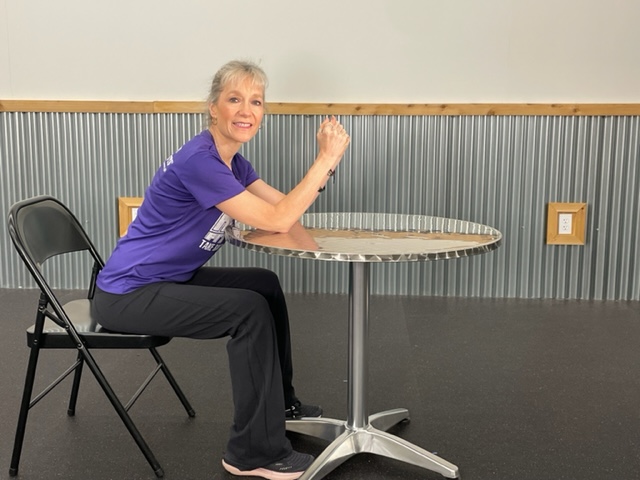
Last week I showed you some great warm-up and cool-down techniques that you can easily do at home with items you probably already have in your pantry—dry rice and popcorn kernels. I learned these methods from my client Nancy, an Occupational Therapist and certified Hand Therapist who also has Parkinson’s.

Continue reading “Part 2: Warm-up Technique To Treat Parkinson’s Painful Stiff Hands”

Try This Warm-up Technique To Treat Parkinson’s Painful Stiff Hands

Have you noticed your hands becoming stiffer and less reactive when you try to move them? You need to exercise your hands like you do the rest of your body. Whether you have Parkinson’s or arthritis, if your hands become stiff, every task takes longer, and it really affects your quality of life.

Continue reading “Try This Warm-up Technique To Treat Parkinson’s Painful Stiff Hands”

The Scoop on Poop and Parkinson’s (Part 2 of 2)

Last week we talked about the dangers, warning signs, and how to recognize if you are constipated, using the Bristol Stool Scale. Today, we have the final scoop on poop and Parkinson’s article, and how to smooth out the situation.

Continue reading “The Scoop on Poop and Parkinson’s (Part 2 of 2)”

The Scoop on Poop and Parkinson’s (Part 1 of 2)

This is one of my favorite talks to give because people always shy away from it, but it is so important so I ask you… “How often do you poop?” Many people with Parkinson’s disease can’t poop every day resulting in constipation. Constipation is going longer than three days without a bowel movement causing the stool to harden and become more difficult to pass.

Constipation is present in more than 80% of people with PD and may before symptoms like tremor and stiffness even start.

Continue reading “The Scoop on Poop and Parkinson’s (Part 1 of 2)”

Parkinson’s Stooped Posture Causing You Pain? Retract Those Shoulder Blades!

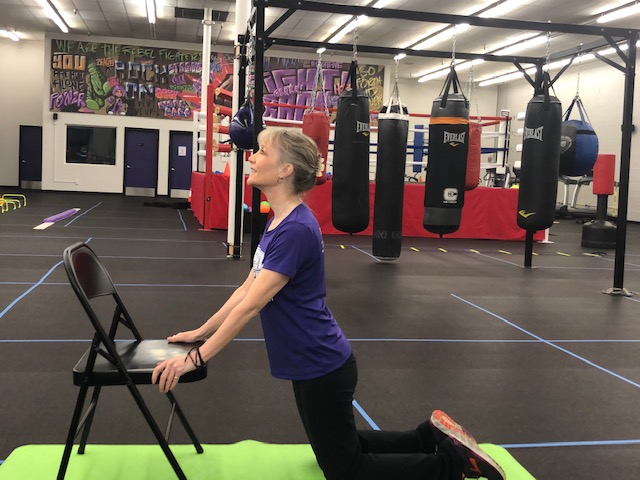
The muscles of the upper back, along with the action of the shoulder blades, are very important to posture and the stabilization of the shoulders. Poor posture associated with Parkinson’s disease often creates tight chest muscles and weak back muscles, which can lead to pain in your shoulders.

Your shoulder blades should “glide and float” on your rib cage. If you have a stooped posture, your shoulder blades can’t sit or glide normally on the ribs. Your chest muscles become tight and pull the shoulders and arm forward, causing pain and complications with the rotator cuff muscles.

Continue reading “Parkinson’s Stooped Posture Causing You Pain? Retract Those Shoulder Blades!”